
Roaming With Royals: Exploring Jhalana Leopard Reserve


Last week, I visited Jhalana Leopard Reserve. Hidden in the outskirts of Jaipur, Rajasthan, this isolated piece of wilderness is fantastic not only for big cat lovers, but also birders and birders and photographers.
Located in the capital of Rajasthan, Jhalana Leopard Reserve covers an area of approximately 24 square kilometres. It was declared a national park in 2016. Prior to the government's intervention, the area had a notorious reputation as a hotspot for illicit activities. It was a place where people would clandestinely indulge in drinking, drugs and engage in other unlawful affairs, leading to unfortunate incidents and even a number of deaths.
However, a remarkable transformation took place when the authorities recognized the immense ecological value of the area and decided to protect and conserve its rich biodiversity. With rigorous efforts and strict monitoring, Jhalana underwent a renaissance of sorts, evolving into a haven for wildlife enthusiasts and nature lovers alike.
The park is organised wonderfully, with an efficient system for entering the park. The park opens for the morning safari at 5:30 AM during the summer season, and closes at 8:30 AM. The evening safari starts at 5:30 PM and ends at 7:30 PM.

The park is primarily known for its thriving population of leopards and is one of the few places in India where leopard sightings are relatively common. Apart from leopards, the park is also home to other wildlife species such as spotted deer, blue bulls (nilgai), wild boars, peafowls, and various species of birds. Although extremely tough to sight, the park is also home to small populations of Striped hyena, desert foxes, jackals and Indian civets as well.
On this trip, I had the pleasure of carrying my Sony A7RV along with my new 200-600mm F5.4-6.3 variable aperture lens. As usual, this setup performed wonderfully. I was able to zoom out and capture habitat shots at 200mm and I could take close ups at 600. In spite of the limited light in the morning, I was able to get great shots, as the body was able to achieve great image quality upwards of ISO 3000.
My luck with leopards in India has never been very good. I have been visiting parks all around central India since I was 5 years old, and had seen only one leopard, in Pench National park. All that changed on my first safari in Jhalana. Shortly (around 10-15 minutes) after entering the park, as the guide was driving, we spotted a leopard drinking water from a puddle that the previous night's rain had left. As soon as he saw my jeep, he stood up and walked back into the heavy and dark brush. The sun still hadn’t completely risen and I was shooting at ISO 8000, so my photos from this sighting weren’t the best.

As soon as the leopard disappeared from sight, the guide raced to a road on the other side of the thicket where the leopard had gone. Sure enough, he appeared again. This time, I was able to get some better shots. As soon as the sighting got over, clouds gathered and we were caught in a downpour. I bundled up my gear in towels and rain covers, and we pushed on. In spite of the rain, we managed to see some spectacular birds including one of my favourites; the Paradise flycatcher.
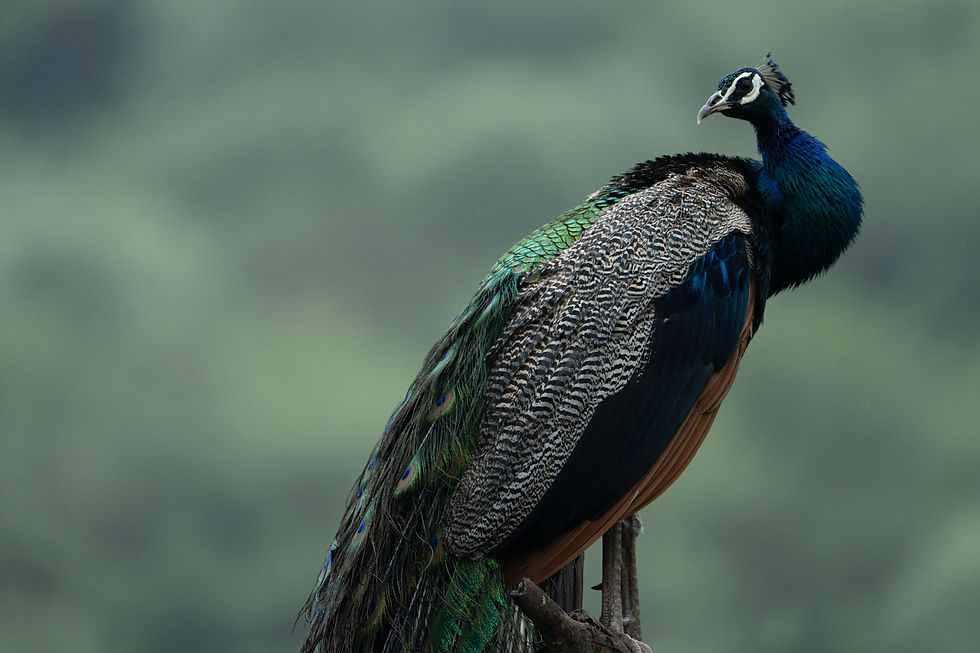
The next morning, on my third and final safari, my guide got word of a leopard in zone 1 of the park. We immediately rushed to the area. The jeeps at the sightings could be seen from more than hundred metres away. As we approached, I immediately spotted the leopard around 200 metres away on a hillside. I immediately whipped my camera out and shot some photos. I also got some great video footage from this sighting, which is now out on my Instagram. On the same safari, I saw a lot more paradise flycatchers, and even some peacocks with their tails in full display.
While my journey through Jhalana Leopard Reserve was filled with awe-inspiring wildlife sightings, one concern that arose during my trip was the issue of speeding within the park. It became evident that whenever news of a leopard sighting reached our guides, an undeniable sense of urgency filled the air. They would swiftly instruct us to hold on tight as our vehicles accelerated rapidly towards the sighting location, sometimes with little consideration for the park's resident land-dwelling birds, such as lapwings and francolins, that are commonly found in the area.

Above: A leopard sighting in the park. The leopard got scared and eventually ran away.
I also observed instances where a high number of jeeps would converge upon a single wildlife sighting, creating a chaotic and overwhelming atmosphere. This not only disrupts the natural behaviour of the animals but also poses a threat to their overall safety and stress levels. The constant presence of numerous vehicles and the accompanying noise can startle and frighten the wildlife, driving them away. In addition, crowds of jeeps can obstruct the movement of animals within the park, limiting their access to crucial resources like water sources or preferred foraging areas.
As a responsible traveller and nature enthusiast, this raised concerns within me. While the thrill of spotting a majestic leopard is undeniably exciting, it is crucial to strike a balance between the pursuit of these exhilarating encounters and the well-being of the park's entire ecosystem.
In conclusion, my expedition through Jhalana Leopard Reserve in Rajasthan was an unforgettable journey that encompassed both the wonders of nature and the challenges of responsible tourism. As I delved into the captivating wilderness of the park, I couldn't help but be amazed by the transformation it had undergone, evolving from a troubled past to a thriving sanctuary for wildlife.
While the speed and thrill of reaching leopard sightings in the park was exhilarating, it became apparent that there was room for improvement when it came to balancing tourist's enthusiasm with responsible practices. The need to maintain a sustainable approach to wildlife tourism became evident, particularly in terms of minimising disruptions to the park's diverse bird and animal population and respecting the delicate ecological balance.
However, this concern should not overshadow the remarkable strides taken by Jhalana Leopard Reserve and its dedicated conservation efforts. It serves as a testament to the power of collective action in safeguarding precious habitats and their inhabitants.


Comments